
Tag Archives: Israel

Navigating the Rapids: Questions for Intercession and Conversation

As I compose this essay, polarizing cultural and political leaders continue their venomous attacks against their opponents. Labels of “Nazi” have become a comma in discourse and vulgarity is now a sign of transparency. Invading church services is now heralded as civil rights agitation and any critique of radical Islam is suppressed as a phobia. 

Antisemitism continues metastasizing, with deceptive voices claiming only opposition to Zionism while not hating Jews. European nations are divided between nationalists with closed borders and globalists in a freefall capitulation to external powers or Islamicists. Crowds are chanting against the USA and ignoring the real injustices in Iran as thousands rise up against a truly evil regime. 

I have paused my commentaries for several months so that when I write, it is not one more reactive piece only exacerbating the divisions. In addition to all these external issues, we find people of faith divided over their responses to events, with some MAGA activists wrapping the Cross in a flag and those infused with hatred toward President Trump refusing support for any administration policies. 

As a Christian devoted to Christ’s kingdom and wise participation in society, I offer the following thoughts as a stimulus for reflection and civil conversation. Even in my most passionate moments, I will not:

  • Label or libel individuals and deny the humanity of any person.
  • Categorize all who disagree with me as “the enemy.” 
  • Stop believing that there is hope when people of conscience work together. 

As a public intellectual, I will:

  • Affirm that truth can be discovered and narratives can change.
  • Affirm that there are first principles of ethics and morality essential for a free and virtuous society. 
  • Seek principled consensus and live peaceably with people who see the universe differently. 

In the spirit of Jesus of Nazareth and Socrates, Here are some questions for conversation and prayer.

Question One: What does a secure border and reasonable immigration reform look like, so America is hospitable and wise?

Most Americans want border security, deportation of serious criminals, and pathways for citizenship and legal work status for people ready to contribute to our country. They are happy with some current policies and prefer surgical arrests to sweeping actions. The problem is that the paid-for-protestors and radicals on the Left want open borders and less rule of law. The Mayor of Boston recently said that everyone has a right to come to the US and have a job. On the Right, finding moderation is hard when any adjustments are seen as compromise. Some want a fortress with no hospitality. The key here? Congress finding courage and working for real immigration reform. 

Question Two: How can detractors and supporters of President Trump find a way to discuss issues rather than react to a personality?  

President Trump’s arrogance and self-promotion undermine what might be prudent domestic and foreign policies. If he will stop insulting and litigating against opponents and focus on cultivating consensual action, more peaceful progress is possible. At the same time the haters of Trump do not understand his deal-making proclivities. Greenland was never going to be an American state or territory. Several truces around the world are positive steps away from violence; however, there is much more work needed securing enduring peace. 

Question Three: Is there a real pathway to peace in the Middle East?

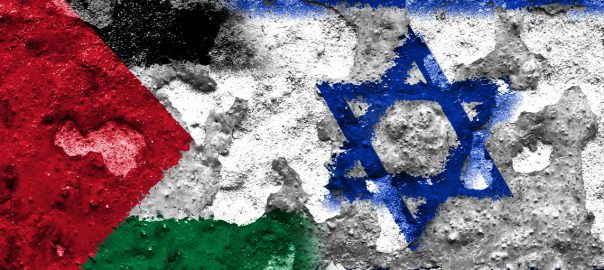
Israel is not a Western “settler-colony” imposing her will on a peaceful Palestine. The Jihadists opposing Israel want her absolute destruction and the end of all Jewish presence in the world. Some historical facts:

  • The international community has affirmed the need for a Jewish national home in her ancient land from the end of WWI. The convulsions following the collapse of the Ottoman Empire led to the rise of Arab nationalist and jihadist movements, all of whom opposed any Jewish presence. 
  • The Holocaust killed over six million Jews. In response, leaders and nations rallied around a modest homeland for the Jews in the Holy Land. The UN partitioned Palestinian territory in 1947, designation areas for Jewish settlement and the Palestinian state of Trans Jordan. No Arab nation would affirm the right of these survivors to a state in their ancient home. War ensued in 1948, with the armies of six nations arrayed against a small force. JORDAN invaded the West Bank and secured all of Jerusalem, in violation of UN mandates. A truce (NOT a treaty) came in 1949. Israel’s quick victory in 1967 secured her existence and began decades of peace talks. The Camp David Accords of 1978 saw Egypt secure the Sinai and make peace. Jordan stopped her overt hostility and a framework for the future was established.
  • From the 1970s to the mid-2010s, Israel has offered a joint capital in Jerusalem and over 90% of her reclaimed territory in the Judea and Samaria for peace. She left Gaza in 2005, only to see Hamas take a beautiful region and turn into a terrorist state. Finally, Israel is the only working (and contentious) democracy in the region, with over two million Arab citizens and equal rights for all minorities and religious communities. 

Question Four: Is there a way forward for a liberated Iran?

The great Persian people deserve a democratic society. With freedom of conscience/religion, equal rights for all, and opportunities for economic and social flourishing. The current totalitarian regime is violently suppressing dissent. The US is supportive of regime change from within and offering strong military presence that can be targeted toward regime leaders and military targets. This is an opportunity for people of conscience in both American parties to unite. The barrier is that some of the people and parties that oppose President Trump are stuck in their red-green alliance and refuse to support change because it is neither Islamist nor Marxist. Some are silent because they cannot support any administrative initiative. On the right, Fortress America opponents of any intervention rail against engagement. The way forward is steady support for dissidents, further sanctions, and a refusal to accept the apocalyptic regime as it is. 

The above are just a few of the contentious issues. The world is complicated. Friends, let’s reflect before we react, pray for those that oppose us the most, and offer workable solutions creating pathways for all to flourish. In my next essay, I will offer questions/thoughts on human identity, public ethics, and economic wisdom. We can build a better future once we stop shouting and start listening. 

Post 2024 Election Insights: Humility and Hope

As people celebrate or mourn the election results of last week, it is wise to consider the varied messages by the voters. Some really good news: there are no accusations or evidence of serious fraud or malfeasance by either party and the current Administration is committed to peaceful transition. Kudos to those elected and those leaving office for their commitment to our process.

Observations

The BIG news: American politics is complex, local, and voters do not always conform to economic, ethnic, religious, social, or political expectations. All candidates must listen to the concerns underneath the issues. The Republican victory is a response to real life problems that people of diverse classes and cultures think are important. The economy and work opportunities, safety, immigration, and cultural sanity were at the top of the list. At the same time, abortion rights were expanded in seven states, and many who voted for a Republican president voted for Democratic legislators.

The Democratic Party was playing catch-up the entire time as they had just a few months to present a new candidate to the nation. There was not time enough to move toward the political center which is where most Americans feel at home. The shift in voting patterns arose from particular concerns. and reflects voters’ resistance to elites badgering, condescending, and exhorting them to vote certain ways or be labeled as foolish at best and other epithets at worst. For example, the same groups that normally appreciate larger federal involvement do not appreciate being labeled and libeled for wanting to keep female and male sports separate. Many moderate to liberal religious people of all ethnicities and traditions grew tired of being considered ignorant or phobic.

Hopefully, Republicans will see this moment as an opportunity for prudential stewardship of the public trust, from shedding excess waste in spending, reforming and simplifying tax policies, moving toward energy independence, and finding solutions for crime and unchecked immigration. At the same time, Americans are generally hospitable to legal immigrants, generous to those in need, and depend on Medicare and Social Security functioning well. Working- and middle-class folks recoiled at paying off student loans, especially those that paid them off in full or worked their way through school.

A Place for Divine Providence

As a Christian, how do I see God at work in this moment? Three things guide my discernment. First, God’s providence leaves much room for human freewill and its consequences. Second, only a moral and spiritual awakening born of the Holy Spirit and touching all of life will reverse the idolatry, immorality, and injustice of the last several decades. This awakening is not a political movement, but a divine invitation to follow Christ crucified and risen. Third, there are moments of opportunity God grants to individuals, communities, and nations to alter course and move in the direction of, “doing justice, loving mercy, and walking humbly” before the Almighty (Micah 6:8).

President Trump’s uncouth methods and unwise words, and his intense promotion of election interference alienated many. The election of President Biden was seen as a move to moderation and civility. Instead of leading from the center, however, the Biden administration missed their opportunity and chose policies that alienated moderates and animated conservatives.

The second Trump administration has a chance to serve all Americans and promote policies that can unify a very divided and diverse nation. Leaving abortion with the states lets both sides persuade constituencies. Energy independence with proper environmental safeguards will help many economically. Creating a hospitable and secure border will have generational impact. Defending Israel’s right to flourish and make peace with her neighbors (expanding the Abraham Accords) is important. Standing for religious and political freedom around the world are morally wise positions.

Peacemaking Advice

As this transition occurs, may the new leaders eschew revenge and work collaboratively across the divides. Keep your promises with humility. Instead of mass deportations, register all undocumented residents and start the pathway to citizenship and residency. Deport criminals. Screen people at the border. Protect the vulnerable, especially children. Incentivize entrepreneurship. Streamline federal bureaucracies and return power to the states and municipalities where possible. Work with leaders of both parties and balance a budget. No life-altering drug treatments or surgeries for children confused about their sex. Stimulate fresh thinking on homelessness, with new ideas and resources for addiction and mental health treatments. Support law enforcement while holding them to high standards and winnowing out corruption and racism.

May those assuming power understand the gravity and hopefulness of this moment and walk forward with courage, love, and wisdom.

Sanity about the Middle East: A Historical Overview, Part Two

The modern State of Israel was born out of two great movements: 1) the deep desire of Jews throughout history to have a homeland with Jerusalem at the center; and 2) the aftermath of the Holocaust as over six million Jews were systematically murdered during World War II. Form the first reports of the Shoah in 1941 and 1942, to the liberation of the concentration and extermination camps in 1944-1945, the world found it impossible to believe that such dehumanization and mechanized mass murder could happen. General Eisenhower, the Supreme Commander of the Allied Forces, ordered filming and written accounts to be made, and he predicted there would be later denials of this evil.

By 1947 Great Britain could no longer justify restricting Jewish emigration to their ancient homeland and turned over control of its mandate to the newly formed United Nations. During the war, England and all the Allies closed their doors to Jews seeking to escape the Nazi genocide. At Evian in 1938 and again in Bermuda in 1943, antisemitism won the day, even after clear reports of the atrocities.

On November 27, 1947, the United Nations voted Resolution 181) to partition the British Mandate into two areas: a small Jewish enclave where populations were mostly Jewish, and a larger Arab land. The Jewish Zionist groups accepted the small size and difficult borders. The Arab nations and populations did not. The Mufti (Islamic leader) of Jerusalem, Haj Amin El-Husseini, promptly declared jihad and the surrounding Arab nations (Egypt, Syria, Lebanon, Jordan, declared their opposition. The Mufti had been a close ally of Hitler, and he approved of the extermination camps of Auschwitz and Sachsenhausen. On May 14, 1948, Israel declared her independence as a nation, again accepting the UN boundaries. Israel also asked for all peaceful Arabs within her nation to stay in their homes and not take up arms. Alas, the Mufti and the nations around her all called for war.

A truce was declared in 1949. In the next 18 years, a variety of movements, resolutions, and organizations emerged among the Arab opponents of Israel, all saying, “NO!” to Israel’s existence and calling for all her people to be thrown into the sea. Please note, from 1949-1967 Egypt ruled in the Gaza, Syria possessed the Golan Heights, and Jordan ruled Jerusalem and what is called the West Bank. The 400-500,000Arab refugees from the 1948 conflict were NOT welcomed into the Arab nations – they were left on impoverished refugee camps, a perfect place for radicalizing the generations of haters.

The Palestine Liberation Organization and its military branch, Fatah, was established in the 1960s with a charter for the destruction of Israel. It is only at this moment that a “Palestinian national identify” was manufactured by the PLO with KGB support. While many Arabs had lived for generations in this land, they all identified with one of the cultures or nations surrounding them.

Since 1949, there have been numerous opportunities for peace:

  • In 1967, Israel defeats her much larger enemies and gains control of the Golan Heights, Gaza, The Sinai, the West Bank (Judea and Samaria), and Jerusalem.  These gains came from Israel defeating her foes on the battlefield, not a plan of genocide or expulsion.
  • In 1973, Israel was invaded and came close to losing her battle with Egyptian forces in the Yom Kippur War.
  • In 1978, Egyptian President Anwar Sadat and Israeli Prime Minister Menachem Begin sign the Camp David Accords, bringing peace between Egypt and Israel, full diplomatic recognition, and a framework for the future. Egypt receives the Sinai Peninsula back and leaves Gaza for a future Palestinian State.

From 1978 to the 2000s, numerous peace plans have been generated, with Israel willing to give back up to 93% of the territories gained in 1967 and even share a Jerusalem capital. Every time these accords are sabotaged by Arab leaders refusing to recognize Israel’s right to exist. The late Yasser Arafat, head of the PLO, would smile for Western cameras, then reassure Arab audiences that Israel’s destruction was still the goal.

In 2005, Israel removed all her Jewish citizens from Gaza and gave control over to the Palestinian Authority, leaving a beautiful land, flourishing businesses, and hope for the future. Alas, in 2006, Gazans, fed up with the corruption of the PA, voted in Hamas, a terrorist organization devoted to Israel’s destruction. Hamas turned Gaza into a fortress, with their military hiding behind civilians. 

There is much more to share here, but this historical overview helps the thoughtful person realize that there can be no new Palestinian State and no lasting peace until Arab leaders recognize Israel, commit to diplomacy and trade, and renounce violence.

The apocalyptic ambitions of Shiite-rule Iran, the rapacious economic goals of China, and Russia’s ever-present interest in power all make this region volatile. Add to these empires the scores of Islamic radical movements, and generations of Arabs raised on anti-Jewish propaganda (including Holocaust denial), and we have a potent mix for eternal conflict.

This is the history ignored by current protestors, who chant slogans for Israel’s destruction and Jewish extermination. In the next post, I will assess the current situation and prospects for peace. Israel is far from perfect, but no other nation has held out her hand in peace so often, only to see it slapped away. Israel has no genocidal policies, and she will make peace when her enemies stop their killing.

Sanity about the Middle East: A Historical Overview, Part One

Over the last two decades, I have spoken and written extensively on the conflicts in the Middle East, especially between the State of Israel and her enemies. The horrors of October 7, 2023, and the subsequent explosions of antisemitism around the world and in the USA demand a response that is thoughtful and offers solutions for peace.

There have always been haters of Jews and of Israel…even some self-loathing anti-Zionist Jews. And there have been courageous Arab leaders willing to make peace. Egypt, Jordan, the UAE, Bahrain, and Morocco are enjoying the economic and social benefits of peace, with Saudi Arabia and others quietly moving toward peace with Israel. Formal peace agreements and frameworks for a new Palestinian State have been presented from 1978 (Camp David I) all the way to 2015. Each time the world hopes, and each time the Palestinian leaders and Islamic radicals change the terms and declare a new “Intifada” or “Jihad.”

What makes current antisemitism so heinous is the complete delegitimizing of the Israel as a nation. We are not talking disputes over borders, capitals, or military forces. This new generation of protestors is siding with radicals and declaring that the entire history of Israel since 1948 is nothing but a “White Settler Colony” or an imposition of the West committing “genocide” against Palestinians in Gaza and the West Bank.

In this essay and the one next week, I will offer historical facts and frameworks of hope that are contrary to the deluded crowds shooting, “From the River to the Sea Palestine will be free.” The same evil forces animating the Holocaust are at work again and must be opposed. Here are some important facts giving context for current events:

  • The Jewish people have resided in Jerusalem and this region for over 3000 years.
  • “Palestine” was an artificial creation of the Roman Empire after they defeated the Jews in a second rebellion in 135 AD. The Romans deliberately named the region (trying to erase Judea and Samaria) after the Philistines, the enemies of Israel who settled in Gaza and came from Crete.
  • From the second century all the way to the 19th century, this land has had a succession of empires, while always having a Jewish population. The Crusades briefly brought Christian rulers (1099-1178), but after 1291 and until 1917, it was ruled by the Seljuk Turks and then the Ottoman Empire.
  • In response to persecution in both Europe and other regions, Zionist movements (religious and secular, conservative and liberal) arose in the mid- and late-19th century, calling on Jewish people and their sympathizers to create a safe homeland in the Middle East. From the 1850s to the early 1900s, many Jewish groupie legally purchased land for farms and villages from local landowners and began to transform deserts and swamplands and create lively places like Haifa and Tel Aviv. There were some instances of violence, but they were few.
  • In the wake of World War I (1914-1918), calls for accelerating a homeland increased, with British and international support between 1917 and 1923. Various Zionist groups were open to enclaves within the Transjordan Kingdom, or semi-autonomy under Great Britain, or a small nation with good relationships with Arab neighbors.
  • But along with increasing desire for this well-deserved homeland, the 1920s saw the rise of Arab nationalism and jihadism, the birth of the Muslim Brotherhood, and radical leaders calling for an end to colonialism. No Arabist movement wanted any kind of increased Jewish presence and violence toward peaceful, legal Jewish communities increased.

Next week we will continue the narrative from World War II to the present. It is vital that honest people see that Jewish longings for peace and safety in their ancient homeland are legitimate biblically, historically, and affirmed by international law.  As we will see, the idea that the modern state of Israel is a genocidal imposition is an outrageous projection of the jihadists’ desire to eliminate Israel.

One more topic must be touched on. There are anti-Israeli protestors claiming they only oppose Israeli policy but are not anti-Jewish. This is a lie for 99% of the agitators. Israelis themselves live in a contentious, pluralistic democracy. The only place where a rainbow flag flies safely in the whole region is in Israel! Israel has over two million Arab citizens; the current Palestinian leader insist that their future state will be, “Jew-free”. The PLO, Hamas, and Islamic Jihad all have charters calling for Israel’s destruction.  Disagreeing with Israeli policy is fine, denying the legitimacy of a nation created in the shadow of the Holocaust is evil.

Hopeful Realism for 2024, Part 1

Every new year begins with forecasts and predictions for the coming months. Some of these are thoughtful prognostications rooted in good research and reflection. Other are subjective guesses, offered as clickbait in a fantastical or fatalistic spirit. In this essay, I want to offer some pithy statements to stimulate thoughtfulness and ethical action. In a world awash with extremes, I hope these will encourage hearts and empower creativity.

Realism: We will continue seeing President Trump hounded by his enemies and his supporters labeled as extremists.

Hope: Both parties will offer alternatives to the current and previous administrations.

Hopeful realism: Perhaps we can debate important issues like the budget, immigration, foreign policy, and a balanced view of the environment.

Realism: Gender anarchists will continue advocating for unsafe procedures on minors and insist that identity is purely subjective.

Hope: Thoughtful people are waking up to the destructive narcissism and big pharma influences on impressionable young people.

Hopeful realism: Permitting adults (on their dime) to modify and express their identity is part of a free society. At the same time, parents must retain final authority in caring for their children.

Realism: Israel will be criticized regardless of her military or political actions by intersectional radicals that think she is an oppressor of Palestinians.

Hope: Thoughtful folks will see that Israel wants peace with her neighbors. This is only possible with a new generation of Arab leaders willing to acknowledge Israel’s right to exist as the national home of the Jewish people.

Hopeful realism: Israel will win the current conflict and will establish security measures, allow aid to flow, and attempt to welcome a peaceful solution for both Gaza and the West Bank.

Realism: Colleges and universities will face further reckonings concerning true freedom of ideas and speech.

Hope: Educational leaders will restore the true exchange of ideas and not allow agitators to veto presentations.

Hopeful realism: We will continue seeing older institutions refuse to change their ways while new, entrepreneurial ones find success.

We will continue exploring the future in the next essay. Here is some food for thought as we step forward this year. Let’s reject fatalism (“Nothing will change…”) and fantasy (Everything will be wonderful…”)  and choose faith, hope, and love as our dispositions and discover a future filled with unexpected delights, inexplicable challenges, and increasing wisdom.