Rightly Ordered Loves, Part 4: Love and Immigration: Hospitality and Security are Possible

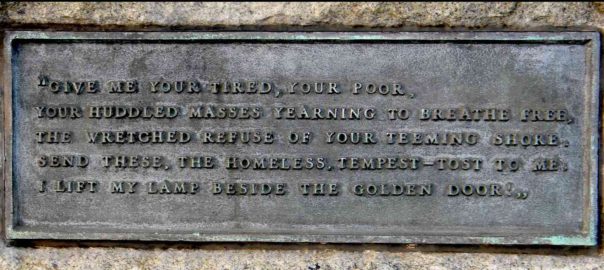
The immigration history of the USA includes much prejudice and xenophobia, punctuated by moments of hope and inclusion. During the height of Ellis Island’s embrace of millions (1880s-1910s), Chinese immigrants in California were imprisoned, oppressed, and subject to severe restrictions if they did manage legal status. Heartening narratives of religious and social freedom are unfortunately concomitant with nativism and racism. Maryland was founded in the mid-17th century as a Roman Catholic refuge. By the 1840s, there were anti-Catholic riots in response to the influx of Irish survivors of the potato famine in their homeland. The open doors of the late 19th and early 20th century became the sealed gates of the 1920s to 1940s, with Jewish emigres severely restricted at the height of the Nazi genocide.

Rightly Ordered Loves, Part 3: Sexual Sanity

When historians look back at some of the moral currents of the early 21st century, they will call it an “era of anthropological confusion.” It is good that we are no longer imprisoning consenting adults for private activity and that there is robust dialogue of gender and sexual identity and practice.

Rightly Ordered Loves, Part 2: Justice is Social and Racial Peace is Possible

“Social justice” is a loaded term. For liberals and progressives, it is a summative refrain containing their concerns for economic, gender, and racial equity, including much more governmental intervention righting historic wrongs. For conservatives, it has become a byword, representing ideologies and policies antithetical to human freedom and flourishing.

Rightly Ordered Loves, Part 1 Understanding Our Challenges

In these contentious days, it is hard for voices of sanity to be heard about the name-calling and ideological noise. In this four-part series, I want to present a new vision and voice for public dialogue that offers hope for both peaceful engagement and prudential solutions to our seemingly intractable problems.

Some Wisdom for the Journey

We cannot make every cause our own. We can be well-informed on issues, but each of us must focus on the particular concerns we are equipped for. What areas of the common good are we called to influence? For some it is pro-life issues (yes, we must all care about this). For others, it is education, homelessness, employment, affordable housing, personal life-change, etc. If we each find our place, our community will flourish. If you are not sure, begin with where God has you today and allow your character, competencies, and charisms to bloom where you are planted.