Category Archives: Islam

Making Sense of the World: May 2026

My daily life has been very compressed in the past months. Speaking and advising, editing and writing, teaching and serving leaders: I am grateful waking up each day with purpose and people to encourage. In the coming months this site will be refreshed, and I am looking forward to a new season of communication. Thank you for your patience and prayers.

Information overload

Local, national, and global events assail us hourly and making sense of it all is more difficult. If someone says, “The sky is blue” there are immediate posts clarifying what blue means and whether the first commentator has the authority to speak about the sky! Yes, I am using humor and hyperbole…but this process can overwhelm us. For example:

  • Israel carries out a targeted strike on Hezbollah bases. One or two outlets simply report the news…but hundreds in the antisemitic chattering class declare another, “genocidal action.” 
  • A state court overturns extreme gerrymandering of voting districts. Immediately political proponents scream racism and the subversion of civil rights, failing to see the racial biases in maps that look like crazy Rorschach images and not sane geographies.
  • Young women advocate that female sports remain biologically female for safety and an equal playing field. Headlines declare these athletes “transphobes” and politicians (especially on the Left) dance around the issue. 
  • Radical Islamists living in Europe explicitly declare their aim of conquest and the imposition of Sharia Law. Opponents of such aims are branded intolerant and Islamophobic and the debate about the rule of law and religious freedom is truncated. 
  • Christians are targeted for persecution globally and the world in mostly silent. People praying silently across the street from abortion clinics are arrested for their thoughts in Great Britian.  
  • President Trump speaks without reflection, and some positive policies are lost in the uproar over his latest insults and observations. 

Some Insights

There are wonderful voices of sanity and women and men debating issues with civility. Unfortunately, the loudest and often least informed voices get too much attention. Making sense of events and ideas, information and issues requires maturity and thoughtfulness. Here are four insights that can help with sense-making and create pathways toward wisdom.

Insight One: There are significant spiritual and political forces at work that aim for control, all in the name of creating a better world. Totalitarian goals of micromanaging our lives are disguised with concepts of compassion, equity, fairness, and even saving the planet. Look deeply and there are ambitious global technocrats that believe they know what is best. What is out task here? Affirming axioms of freedom and virtue, faith and responsibility that lead toward human flourishing and refusing the relinquishment of freedom for security.

Insight Two: There really are people that hate freedom of conscience/speech and desire religious or secular control. The “Red-Green Alliance” of Radical Islam and Marxism is real. Both of these groups hate the Judeo-Christian and Enlightenment  philosophical and religious principles that lead to prosperity. Each group thinks they will win in the end…AND increasingly, each group in this unholy alliance is either advocating or excusing violence, while projecting their sins on their opponents. 

Insight Three: Even talented and thoughtful leaders can be corrupted by power. In the providence of God, abuses of power, financial evils, and sexual malfeasance are being exposed and the fallout is profound. We must own these grievous sins, engage in corporate lamentation and repentance, and humbly serve. We are all beautiful and broken, and when we forget that biblical faith is rooted in grace, pride begins subverting persons and institutions. 

Insight Four: While we must speak and work on vital issues with humility and wisdom, only a spiritual awakening can change the trajectory of neighborhoods and nations. This is not a call for passivity and disengagement. All Christians are commissioned for influence and impact in their spheres of relationships and work. At the same time, only the grace of God will turn enemies into friends and change hearts and minds. 

And one more thought

If we believe that our prayers matter, we will take time and pray that God’s grace and mercy will touch the hearts of those we disagree with the most. There are public figures that open their mouths and my first reaction is not holy! It is the next moment that determines personal and social pathways: we bless and intercede for the very ones who marginalize and persecute us.  May God help us be thoughtful, prayerful, and wise in these days of confusion and reaction.

Letters from Exile #4: Being Human, Part 3: Liberation from Ideological Captivity

As we aim for peaceable discussion and principled consensus concerning human flourishing in a pluralistic society, awareness of ideological influences is important for clarity and conversation. So much public discourse is talking around or over one another, instead of thoughtful engagement of issues.

Building a thriving society includes understanding our neighbors. This includes humbly learning about other cultures and ethnicities, philosophical and religious worldviews, and discovering principles we have in common. We must desire for all others the liberties of conscience we want for ourselves. While we live with the differences, we can also forge alliances leading to better neighborhoods and nations.

For social cohesion, we must find some common ground on being human and the ingredients that build a prosperous future. The quest is being undermined by ideological extremism that rejects any consensus outside of its own domination.

In this essay, I am presenting three extremist forces fighting for control and offering three foundations for all people of conscience as we aim for freedom and virtue informing our social cohesion.

Extremist ideology #1: Jihadist Islam. While the vast majority of Muslims are peaceable neighbors in many nations, a significant minority desire a restoration of the Umma, the global Islamic empire that will eventually cover the earth and “liberate” humankind. For some Muslim strategists, this is a long game of a century or more of proselytizing, gradual influence, infiltration of social and political sectors, and eventual Sharia in every nation in which they live. For others, the aims are more immediate with violence accelerating local and global control. Such radicals come in both Sunni and Shi’ite traditions and truly believe that anything short of absolute submission to Islam is unacceptable. Male and female roles are fixed, and an oppressive paternalism is the norm here. Women are definitely second-class and under the rule of the men. Conversion to another religion or any departure from Islamic strictures are met with social ostracism or violence.

A note: there are Muslim leaders advocating for democratic and pluralist societies, with Islam as a partner with other religions. These irenic leaders are helpful and important but find themselves marginalized by the militants. We should expect several inner conflicts as millions of Muslims – especially women – have tasted the freedoms of other societies and do not want reversion to the 15th century.

Extremist ideology #2: Global, Technocratic Communism and Fascism. The collectivist impulse keeps returning, in spite of the historical devastations of the past century. The World Economic Forum, several groups in the European Union, the Chinese Communist Party, and many elites in other nations really believe that a select group of wise experts should be in charge and that the world will be better with less private property, religious belief, and economic freedom. Both communism and fascism have similar roots of control, with fascist ideology more focused on blood and soil while purer Marxism is class-oriented and less intolerant of ethnic diversity. The COVID-19 moment was a rehearsal for how much freedom people would relinquish for security. One other attribute of this ethos: a contempt for and desire to destroy the nuclear and extended family. The collective must control more than the biological or adoptive parents. Nothing is more destructive of the well-being of a person that this mentality.

A note here: There is much room for debate among people of conscience concerning governmental toles in people’s lives. Leaning toward slightly more or less local, regional or national governmental engagement does not make one a communist or fascist.

Extremist Ideology #3: Hyper-Individualism (hedonism and libertarianism). Here the focus is completely on the individual and the pursuit of personal fulfillment. Autonomy is the prime value and minimalism in personal and social morality rule here. While affirming the dignity and liberty of each person, the worldviews within this ideology fail to account for the deep human need for community and for love that unselfishly serves others. “No man [or woman] is an island” remains as trenchant an observation as it was when John Donne first wrote it in the 16th century. Without reference to God or a higher good, such individualism pursues pleasure and power without the restraints of humility and service. Subjectivism and post-truth epistemology offer little hope for civil consensus.

All of these ideologies are antithetical to freedom and flourishing and a different way of principled liberty must be offered. In the three principles presented below, I offer a starting pathway for progress out of the confusion and polarization.

Principle #1: Freedom of conscience and religion is the first freedom, and theocratic coercion will not produce a creative and cohesive society. As a devout Christian, I do want everyone to come to faith in Christ. But such decisions are voluntary, and until the end of this age I will affirm for all others the same freedom of religion I desire for myself.

Principle #2: Totalitarian ideologies bear terrible fruit, with hundreds of millions killed and oppressed in the past century. We do need government, but it must serve the people and not compel an allegiance that belongs to the Almighty and ones’ conscience. Whether called the extreme Left or extreme Right, Marxism and its branches must be roundly rejected.

Principle #3: In answer to the hedonism of our today, we must affirm that we are hard-wired for altruism and personal fulfillment, for pleasure in the transcendent and the mundane. Part of being healthy is a web of supportive relationships, beginning with the immediate family and then extending to our religious and/or local communities.

As I complete these first essays on being human, I pray that we can recover and renew a vision that sees the divine image in each person, while also accounting for our depravity and need of redemption. I pray that families will nourish children well, preparing women and men that use their gifts and vocations for the common good.  And I pray that we are liberated from the pseudo-utopias promised by religious and secular totalitarians and the fantasies of hedonism that enslave our souls. Freedom rooted in virtue and unleashing the full potential of each person in the beauty of healthy community are reachable aspirations worth our energy and focus.

We Know Better, Part 6: Israel as a Gift to the World

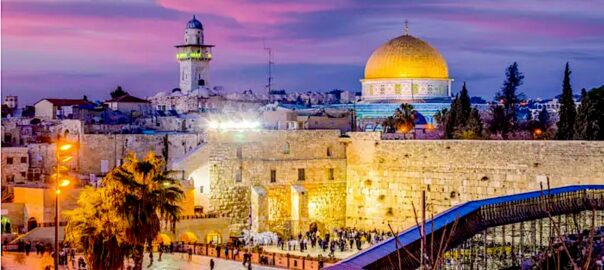
This year, on May 14, the Nation of Israel celebrated her 74th birthday. In the shadow of the Shoah, and against all military and political odds, this small country has survived multiple invasions, continual terrorist attacks, and generations of global leaders seeking her destruction or delegitimization. Although the United Nations approved Israel’s creation in 1947, she has uniformly persecuted this democracy since the 1950s. For a century (from the 1920s to the present) key State Department leaders in the USA have been anti-Semitic and opposed any policies supporting Israel. During WWII, such sentiments kept millions of Jews from emigrating to the USA and other Western nations.

Today’s university students in the USA and Europe are subject to a barrage of agitation propaganda that accused Israel of “apartheid” policies, “war crimes” and being a European or White, “settler-colony” displacing native Palestinians. Some even question significant historic Jewish presence in the region. The BDS campaigns to cripple Israel economically and the well-funded Arab/Middle East Study centers on hundreds of universities means that most students are getting a very one-sided narrative.

Islamist and other radical politicians are proposing that the US congress declare the creation of Israel a “disaster” or “tragedy” and they encourage eliminating any aid to Israel until she relinquishes all the “occupied territories” from her 1967 Six-Day War victories. 

Let’s set the facts straight and get a balanced view of historical and contemporary reality.

The Jewish people have a continual presence in the Holy Land for over 3000 years. This is verified not only in the Bible, but by numerous archeological finds.

“Palestinian” is a created national identity in the wake of pan-Arab failure to destroy Israel in the 1950s and 1960s. Arabs displaced by the war suddenly have an identity as refugees and victims, with no Arab states welcoming them as citizens. I am not minimizing their suffering, but with all the wealth available from Arab states, there should be no one in poverty.

Israel has agreed to numerous plans (1949, 1956, 1967, 1976, 1999-2000, 2010, 2015) for peace and offered 92-96% of the territory gained in 1967 in exchange for recognition, diplomatic exchange, and an end to state-sponsored terrorism. Israel is not the aggressor and her measured responses to continual terrorist attacks are models of restraint.

Israel has more than two million Arab citizens integrated into all facets of society. Contrast this with current Palestinian leaders calling for a “Jew-free” (echoes of the Shoah in Germany) state next door.

Israel is the only democracy in the region, with freedom of conscience and religion, and numerous political parties and social activists. The joke in Israel is, “Five Israelis, six political parties.” The only place in the entire Middle East where LGBTQ+ people have any liberties is in Israel.

Israel is dubbed, “start-up nation” and leads the world in many areas of agriculture, water reclamation, energy technology, medical advances, and information sciences. In fact, Israel’s sworn enemies quietly go to Jewish doctors for critical medical procedures, and Israel is exporting oil and natural gas to her neighbors.

Israel is not perfect and her own citizens are the most critical. There are Left and Right parties, and much discontent. She is working on economic and security alliances with her neighbors and remains open to peacemaking, if Arab leaders and Western elites will face the realities that she is here to stay and a good partner for freedom.

Israel is a gift to our world and we should celebrate her surviving and thriving under such adverse pressures.

First thoughts on Judge Kavanaugh

First thoughts on Kavanaugh:
He is neither Messiah nor Antichrist.

His majority and dissent rulings as a federal judge show perspicacity and restraint and respect for the separation of powers. His appointment is not racist, sexist or xenophobic. His involvement with Starr in the 90s and later his defense of presidential power (during a Democratic administration) are part of a career marked by little controversy and should be seen in context.

It is important to remember that NO prior successful nominee has had to answer hypotheticals (Ginsburg, Souter, Thomas, Sotomayor), so expect some deflection when Roe v. Wade comes up. Also, the whining about “settled law“ is historical nonsense. 19th C. Courts gave us Dred Scott and “separate but equal” and fortunately these were later overturned. Our real crisis is a Congress (both parties) failing to do their job well, finding principled compromises for contentious issues.

He seems a decent, imperfect and kind person with basic integrity and a first-class mind. If religion is made a litmus test, we are violating a fundamental assertion of our Constitution. Feinstein’s horrendous, “Your dogma is strong…” is the last gasp of folks that think devout women and men cannot exercise sound judgment. What if Keith Ellison came up for nomination Progressives would decry conservative critique of his long involvement with the Nation of Islam as, “Islamophobic.” Why is Catholic-phobia tolerated?

I will share more during the formal hearings.

Becoming Human: Competing Global Anthropologies

Dr. Charlie Self
Professor of Church History
The Assemblies of God Theological Seminary
Sr. Advisor, The Acton Institute
Board Member, Missio Alliance

Dorothy Sayers, playwright, novelist and Christian scholar, wrote an important feminist work in the 1930s entitled, Are Women Human? In her essay, she presents the biblical case for gender equality in a humorous and insightful way, grounding mutuality in theological anthropology.  From the Genesis narratives to the new earth of Revelation, she affirms this thesis:

We are all human beings, made in the image of God with a job to do. And we do our jobs as a man or a woman.

This theological vision – of men and women in mutual love and respect carrying out their vocations for the glory of God and the good of others – undergirds the best of ecclesial, economic, political and social liberty. Notice the order of reflection:

Creator > human identity > the call to worship/work > gender identity.

Alas, the effacing (not erasing) of the imago dei has led humankind down all manner of oppressive pathways, from dehumanizing and disintegrating practices of pagan and secular ideologies to the degrading subjugation of women and minorities in the name of religious tradition.

Amnesia of the Creator’s design has also yielded serious psychosocial confusion. Many view gender as a personal preference, a social construct or malleable identity.  In the USA alone, there are ten major family systems, with nine of them alternatives to biological parents and children in the same home. This is not the essay to offer easy answers to these challenges; however, they affirm our need for anthropological clarity and the redemptive grace of Christ.

For followers of Jesus, a full vision of God’s reign includes living the future now in the power of the Holy Spirit, with the church as the herald and witness of the fullness to come. This includes redeeming the wholeness of being human, integrating all facets of individual and social being, including relational shalom with all women and men. Women and men who love Jesus are icons of the coming kingdom. Singleness is not incompleteness, but a signpost of a future where all God’s people are married to Christ and sisters and brothers of one another. Marriage is a special illumination of Christ’s delight in his church, not a superior status.

When we survey other anthropologies, we discover vast “differences that make a difference” (Os Guinness). Our global conflicts are theological and anthropological before they are economic and political. How we understand God and each other is the foundation for liberty and love that empowers the flourishing of all.

A Global Competition

There are three “missionary” anthropologies competing for global influence (and for some, domination). As I outline these, it is important to note that large numbers of people situated within these broad categories are neither self-reflective nor caricatures of the extremes implied by the ideologies. Many women and men, especially those that have relocated to other lands or experienced education and travel, represent synergistic or syncretistic worldviews. It is helpful, however, to uncover the implications of these anthropologies and their concomitant epistemologies and moralities.

(There is a fourth anthropology not articulated in this essay. Eastern pantheistic monism, embracing Buddhist and Hindu traditions, deserves attention for mission and neighborly love, but it is not a proselytizing force in the world. Over a billion persons share this complex and paradoxical perspective that affirms the illusory nature of the cosmos and a call for humility and self-denial that can break the karmic cycle.)

Anthropology #1: Naturalism: pagan and secular visions. This is a catchall category that includes the most ancient fertility cults and polytheisms to contemporary atheistic materialism. In this matrix, humankind is the product of biological evolution or other natural forces (with or without deities that need appeasing). Human nature, however evolved, is completely material, including our ongoing explorations of conscience and morality, religion and spirituality. There is no mind-brain or body-spirit distinction. Westernized proponents see religion as dangerous. Human progress depends on ridding human consciousness of belief in any god. This “vision of the anointed” (T. Sowell) creates inequity by dividing humankind into their version of “enlightened” and “ignorant.” Bureaucratic, intellectual and social elites are given honor while religious groups are objects of hatred or pity.

Anthropology #2: Islam. Yes, Islam. Not some “aberration” or “hijacking” of a great religion, but the heart of the Qur’an and Hadith (authorized interpretations and teachings) itself. Islam’s highest value is submission – to Allah and Allah’s appointed authorities. A qualitative, structural hierarchy pervades all aspects of all Islamic traditions. At the top are male Muslims, followed by female adherents. Next are the misguided followers of Jewish and Christian tradition. At the bottom are found the atheists and pagans. What is of particular note is the inferior status of women throughout the Qur’an and Hadith and in the sociopolitical structures of all Islamic societies. Expressions of this vary from very “liberal” traditions that open most fields of education and work to women to the most strict ideologies that want to reify the 7th to 15th centuries and keep women cloistered and dependent, banned from education and professional vocations and subject to premature marriages, mutilation, honor killings and other oppressions. Enslavement of non-Muslim victims of conflict is part of this ethos.

Anthropology #3: Biblical Anthropology informed by Christian history and theological reflection. Christianity has influenced any land with freedom of conscience, economic opportunity and political liberty. This said, the Church has a long history of is own unbiblical structures, including racism, sexism and moments of syncretistic colonialism. Hubris is not allowed here. What is sanguine is the gradual progress toward full equality rooted in sound theological anthropology. This gradual advance brings the end of slavery, abusive child labor, structural sexism and the foundations for growing racial reconciliation. Christian anthropology declares that in Christ, all are equal: married or single, male of female, rich or poor, Jew or Gentile (the latter couplet covers all ethnic and religious backgrounds).

The Missio Alliance (and this author) assert a robust evangelical egalitarian vision, grounded in the biblical text and realized by the work of the Holy Spirit, who continually liberates our souls from sub-biblical thinking and praxis. All of God’s vocations are open to all women and men, according to God’s sovereign initiative and each person’s willing response. Even more than roles or vocations, Christian discipleship liberates single and married, clerical and lay from the unbiblical classifications that keep some people from enriching the Body and the world.

Choosing Door #3

The only anthropology that liberates people of all faiths (or none) is Anthropology #3. In its best expression it is non-coercive and honors all people of conscience that are willing to live civilly with their deepest differences while working for the common good. As believers partner with the Triune God in his mission for the world, we long for every person to repent and believe the Good News in Christ. Those still considering Christ can be our partner, creating flourishing communities and nations and combatting all forms of hatred, intolerance and sexism.

The pagan or secular materialist ultimately dehumanizes us as we are reduced to biological functions or the victims of natural forces. Islam (even while its many adherents make good neighbors) will never produce a pluralistic land of equality and opportunity. The apriori commitment to a three-tiered anthropology and the inferiority of women, along with the concomitant doctrine of Dhimmitude and long-term commitment to a restored caliphate, make it a poor choice for human liberation.

As we reimagine mission and kingdom influence for the 21st century, communicating biblical anthropology reveals the stark contrast of Christianity to materialist and oppressive ideologies. Jesus’ words and works included deliverance, forgiveness, healing and reconciliation. A robust biblical anthropology, when believed and practiced in community, delivers from arrogance and self-hatred, forgives and reconciles with former opponents, and heals personal and communal wounds when dignity, love and respect flow unimpeded.

We are human beings made in God’s image with a job to do. We do it as men and women being transformed into the image of Christ and walking in the God-ordained works prepared for us from the foundation of the world. What a vision! What a mission! Christ is the contrast to every alternative competing ideology.