
All posts by Dr. Charlie Self

Pastors and Politics, Part 1: Courage and Wisdom

This two-part series encourages local church pastors with wise discipleship and effective engagement on issues of political concern. In this first essay, the focus is on the boundaries of wise communication. The second essay looks at some of the hidden issues and groups overlooked in our polarized era. The author has been a pastor and public intellectual for over thirty years, speaking at business, educational centers, public forums and in churches.

Dr. Jim Baucom, senior pastor of Columbia Baptist Church in Falls Church, VA (in the heart of Metro Washington, D.C.), shared about his growing and vibrant community: “People speak of America divided between Blue and Red, Democrat and Republican. Well, our church is very Purple! We have women and men worshiping and serving together that differ deeply on some policies and principles but agree that Christ unites us in our faith and service.”

Pastor A.J. Swoboda leads Theophilus Church: “We are a church in SE Portland. We are here to help people Find Jesus, Build Community and Pursue Justice.” A.J. is a leading voice in ecological theology and helps churches, seminaries and businesses steward the environment as part of worshiping and serving the Lord. He recently published an important book, The Subversive Sabbath, calling believers to recover the divine principle of rest as part of a healthy life in Christ. One of his happiest moments as a pastor came during the 2016 election. Two members of his church are local political leaders from each party. One Sunday just before the November election they served communion together.

These stories of communities finding a deeper unity in Christ and welcoming women and men from diverse persuasions are heartening and offer insights for pastors in our angry, polarized American public square.  How do pastors unite compassion and conviction and wisely disciple women and men for participation in public life?

The fear of “being political” keeps many pastors from addressing critical issues. Pastors are rightly concerned about ideology and partisanship eclipsing gospel focus. At the same time, addressing vital moral and social issues is an essential part of effective discipleship and mission. What are some boundaries and insights needed in navigating these rapids?

Three Insights

There are three initial thoughts which help displace fear with courage and reactions with wisdom. The first principle is respecting clear boundaries of biblical truth and civil law. The Bible clearly leads Christians toward good citizenship, prayerful concern for authority and reasonable adherence to the laws in place (Romans 13; I Timothy 2). At the same time, obeying divine mandates above the civil ones and understanding that kingdom citizenship takes priority over current power structures is vital (Matthew 5; Acts 5; Hebrews 11). According to current American law (The 1954 Johnson Amendment to the IRS tax code), churches and other nonprofit organizations that are exempt from taxation, “are absolutely prohibited from directly or indirectly participating in, or intervening in, any political campaign on behalf of (or in opposition to) any candidate for elective public office.” So, there are only two restrictions on political discourse that threaten the religious, non-profit status of a local church. The first is endorsement of a specific political candidate. The second is endorsement of one political party over another. In other words, blatant partisanship.

Pastors and churches CAN

  • Speak on any political issues
  • Lead voter registration drives (non-partisan)
  • Host events inviting all candidates

The issue for most is not the letter of IRS regulation but the fear of alienating members and seekers. This leads us to the second insight: Pastors must choose their issues wisely and frame their arguments biblically. The late theologian Donald Bloesch once said that, “Ideology is the enemy of theology.” Pastors must help congregants discover biblical conviction and discernment on particular policies, not just a particular party’s talking points. In many cases, biblically wise framing will help believers engender new ways of seeing (and even solving) contentious issues. Jesus said we are blessed when we are persecuted for obedience in the kingdom, not obnoxious political agitation.

For example, being biblically pro-life is more than being against abortion. Concern for all people from conception to coronation – especially the broken, poor and vulnerable – is foundational for biblical obedience. Respect for those in the military must be joined with a passion for peacemaking, a hallmark of wise Christian leadership. Libertarian and socialist answers for poverty alleviation fall short compared to a Christian vision for human flourishing that incudes spiritual, relational, social and economic help and private/public integration of resources (See Corbett and Fikkert’s seminal work here: When Helping Hurts, a recommended MTF resource).

Boundaries and wise discernment of the deeper issues must be integrated with the third attribute of wise leadership: courage. Courage is the virtue that avoids the extremes of fear and foolishness. In Joshua 1, the Lord tells the new leader of Israel four times to be “strong and courageous.” In Ephesians 6, Paul asks his readers to pray for boldness in proclamation, even under persecution. Some issues are morally clear, and it is the pastor’s task to unveil the rich biblical insights underneath stated convictions. Some issues require more discernment and here humility joins courage as leaders declare their understanding.

Pastors, speaking courageously is needed. When undergirded by deep prayer and tears for our beautiful and broken world, such speech cannot be confused with the agitation propaganda and polarizing insults permeating our public discourse.

History and hope can frame our communication. It took courage for pastors to speak against slavery and it takes courage to foster racial reconciliation. It took courage for pastors and missionaries to oppose rapacious colonialism and it takes courage to promote justice for all. It took courage for pastors to help bring justice to the workplace, reducing child labor, and encouraging fair conditions and wages. It takes courage for pastors to take on entrenched powers in cities and states keeping many from thriving. And it takes courage for pastors to avoid ideological captivity and empower their congregants for leadership in all spheres of society.

Wise boundaries, Biblical foundations for discernment and courage will help pastors shepherd wisely.

Some Reflections As We Go About Our Days

Pause. Breathe. Pray. Love your neighbor through your good work and acts of kindness. Read history. Stay alert to opportunities to serve. Foster justice. Turn off the media for a day and discover normal blood pressure.

Freedom of conscience is the first freedom.

Yes, I do want all around me to place their faith in Jesus Christ. This is an invitation, not intolerance, a voluntary act welcoming a believer into a new identity and sociology, not a political party or enslaving ideology.

And I affirm the liberty of those of other philosophies and religious to debate, share and digress from me. While we dialogue and evangelize, let’s make our neighborhoods flourish and be friends even with our deep differences.

Breaking free of generational oppression (cultural, economic, racial, social, spiritual) is a work of divine power…most often expressed through healthy relationships. As people of faith, hope and love, we have huge social capital – and when we intentionally make friends, the world changes. Every transformational story includes at least once inspiring relationship. Perhaps we are that person for someone.

2 challenges for today:
Libertarians: will you consider the common good and advocate for ethics and unselfishness as part of true liberty? You cannot unite Ayn Rand and Judeo-Christian values.

Socialists: your compassion must be united with economic sense. Removal of incentives chases creativity and innovation away and a large government class is no substitute for entrepreneurship.
There are better paths than these extremes.

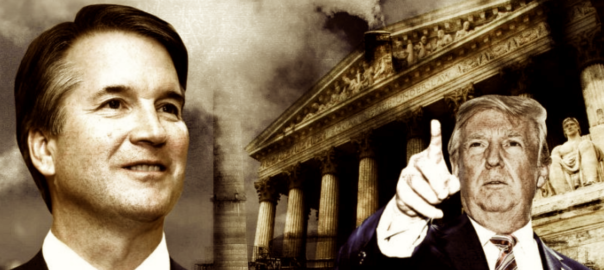
First thoughts on Judge Kavanaugh

First thoughts on Kavanaugh:
He is neither Messiah nor Antichrist.

His majority and dissent rulings as a federal judge show perspicacity and restraint and respect for the separation of powers. His appointment is not racist, sexist or xenophobic. His involvement with Starr in the 90s and later his defense of presidential power (during a Democratic administration) are part of a career marked by little controversy and should be seen in context.

It is important to remember that NO prior successful nominee has had to answer hypotheticals (Ginsburg, Souter, Thomas, Sotomayor), so expect some deflection when Roe v. Wade comes up. Also, the whining about “settled law“ is historical nonsense. 19th C. Courts gave us Dred Scott and “separate but equal” and fortunately these were later overturned. Our real crisis is a Congress (both parties) failing to do their job well, finding principled compromises for contentious issues.

He seems a decent, imperfect and kind person with basic integrity and a first-class mind. If religion is made a litmus test, we are violating a fundamental assertion of our Constitution. Feinstein’s horrendous, “Your dogma is strong…” is the last gasp of folks that think devout women and men cannot exercise sound judgment. What if Keith Ellison came up for nomination Progressives would decry conservative critique of his long involvement with the Nation of Islam as, “Islamophobic.” Why is Catholic-phobia tolerated?

I will share more during the formal hearings.

Immigration

The USA, like most nations, has a checkered history here.
We have been hospitable and xenophobic, paranoid and welcoming. From the Irish to the Chinese, from Eastern Europeans to Jewish Holocaust victims, we have often closed our doors or poorly received “the other.”

And, for over two centuries, we allowed the slave trade to flourish.
For the past 50+ years we have has a confusing system that both welcomes and keeps in the shadows millions of people. I am thrilled that millions want to find a better life from all parts of the world and our Hispanic/Latino sisters and brothers bring family and a great work ethic.

But.

Our current chaos is unacceptable. Borders and security matter and deporting real criminals is part of keeping us safe. On the other hand, inhumane and inconsistent policies keep families apart (and this did not begin with Trump) while opening the floodgates for exploitation.

On the Mexican border, the Democrats want permanent voters (they are even beginning the slippery slope of advocating voting rights for non-citizens!) and many Republicans want the cheap labor. Mexico’s corrupt government fortifies its Guatemalan border while arguing for the right of undocumented crossings to the USA.

Meanwhile, thousands trying to enter legally wait years and pay thousands of dollars.

We can fix this, with courage and wisdom.

First, offer a legal pathway toward either guest worker status or citizenship for current undocumented, non-criminal residents. This means temporarily de-criminalizing the border crossing itself.

Second, deport all convicted felons to their countries of origin.

Third, convene a conference with Latin American leaders and talk frankly about shared concerns about migration, drug trafficking and security.

Fourth, call on the Mexican government to be a partner in helping all secure a better future with border security, hospitable immigration policy and rooting out corruption.

Fifth, improve border security and reunite all families where possible.

Sixth, call the bluff of the sanctuary movements and offer clear pathways out of the shadows (see above) for non-criminals.

And seventh, make sure American citizens and documented/legal residents have priority in education, job opportunities and services. It is wrong for a hard-working American student on scholarship and aid to have to take 5-6 years to graduate while a full tuition paying foreign student breezes through in 4 or an undocumented one gets a full ride.

Conservatives concerned with security are afraid of being labeled racist. Progressives speak of humanitarianism but offer little substance on security.

Let’s get past the accusations and agitation and actually love our neighbor by offering a system that is just! We can do this. Today. In Congress. And millions will rejoice.

“Solving” the Israeli-Palestinian Conflict

At first glance, this title is both arrogant and unneeded. After all, haven’t there been multiple peace accords, from Camp David (1978) to Madrid (1991) to Oslo (1992) to Camp David (2000) again? Nobel Peace Prizes, smiles and handshakes and promises of “final negotiations” all win world approval…only to break down, with both sides blaming the other.

With the recent relocation of the US embassy to Jerusalem (in accordance with U.S. legislation since the 1990s), all the tensions come to the surface again. Gaza rioting at the border wall, Syrian rockets, Iran and Turkey calling for the destruction of Israel – same song, new singers.

What can be done? The EU and many others keep calling for Israeli “restraint” as rockets from Gaza and the Golan rain on Israel and hundreds of terrorists attempt to infiltrate through tunnels. At the same time, Palestinian Authority leader Abbas continues to perpetrate the nastiest antisemitism, refusing to acknowledge 3000 years of Jewish history in the land, rejecting the truth of 6 million dead in the Holocaust and refusing to accept Israel as the national home of the Jewish people. Anti-Jewish sentiments continue to grow throughout the world.

What can be done?

There is a pathway forward. It is truly “the road less traveled” and will require heroism for success. If pursued, however, an era of genuine peace and prosperity is possible. Here are the necessary conditions for a “final” accord:

  • Israel’s existence as a sovereign nation with a right to peace and security is essential. Extermination chants of, “From the River to the Sea, Palestine will be free” will only continue the conflict. Until Palestinians and other Muslim leaders say yes to Israel as a nation, no peace is possible. Egypt, Jordan and others are reaping the benefits of not being at war.
  • Demanding the return of all descendants of people displaced in 1948 is a non-starter. Clear borders, generous aid and economic opportunity can help a new Palestinian State prosper…if they will end their perpetual war.
  • The Palestinian Authority, with help from others, must end ties to Hamas, Hezbollah, Al-Qaeda and others that only want the elimination of Israel. The PA must renounce a tradition of Islamic deception (taqiyya) that allows for truces, but no true peace.
  • Israel will relocate many settlers once the new boundaries are established. It is unrealistic to expect pre-1967 boundaries, but the aforementioned accords open the door to two sustainable states.
  • Economic development and a potential free trade zone could transform a new Palestinian State from one of dependent refugee camps to a sustainable and flourishing participant in the local and global economy.

Underneath the details are the moral and spiritual evils associated with antisemitism and the delegitimizing of the Jewish people’s right to a secure home. All of the above points are only possible when Jews are seen as equal human beings and not dehumanized as dogs and pigs, bloodthirsty bankers and enemies of Islam. Israel leaders are not leading an “apartheid” state, they are not “Nazis” and the border wall has actually saved hundreds of lives. Israel is not perfect, but there is NO moral equivalence between the only democracy in the region and the hatred taught from birth in the territories surrounding Israel.

All forms of neo-Nazi thinking must be rejected. All Leftist canards about Israeli oppression need severe modification in light of empirical evidence.

Peace is possible, but the burden is 90%+ on Palestinian, Arab and world leaders to accept Israel as a gift of freedom, ingenuity and morality for the world.