
All posts by Dr. Charlie Self

Real Questions, Thoughtful Answers, Part 2: Parental Engagement in Education

A thoughtful friend who is a keen observer of public issues, wrote to me the other day and asked, “Charlie, what just happened in Virginia? Many of my friends are calling it a racist backlash. Other are saying the parents are finally being heard. What do you think?”

As always, the issues of any election are complex and people do not fit into tidy cultural and/or ideological boxes assigned by the pundits. This election does demonstrate that a sentence or two can change history! If Governor McAuliffe had invited frustrated parents to a roundtable discussion and expressed empathy, he might have won the election. Instead, he casually opined that the parents should not tell the school board or teachers what to teach. This was not well-received by many in his own party (even if it was exploited by the other side beyond McAuliffe’s intent).

The conflicts of Virginia are found across the nation as parents are deeply agitated about the content and overall quality of the education their children are receiving. This was amplified by the effects of COVID and parental exposure to heretofore unknown topics. The school boards and administrators of many schools are proving themselves unwilling to listen deeply and engage in dialogue, resorting to narrow rules for feedback and even obscuring controversial content, as well as budget allocations. Parents feel condescended to, belittled, and libeled. Disagreeing with some facets of how racial issues are presented is not racism; however, that is the conclusion of some commentators and teachers’ union leaders. Concerns about sex education and the age-appropriate materials is met with derision by educators, some of whom see no problem with telling students to keep secrets from their families.

A bit of historical and social perspective helps as we aim for a better way forward. Three issues are converging in these conflicts: 1) The public schools are challenged with bringing education and support services to children coming from very difficult homes: 2) Professionals take offense at non-experts telling them what to do; 3) We have a deep cultural divide over the scope of education, from broad, ideological agendas to more narrow subject foci.

In defense of most schools and teachers, education can be challenging, especially in under-resourced communities. Kids come to school with emotional and physical needs that make learning hard on a good day. One kindergarten teacher I spoke with summarized her day this way: “I have 20 students. Only a few have two-parent households and come to school with clean bodies and clothes and ready to learn. I think I taught about 8-10 and kept the others from hurting themselves and others.” Social service case workers affirm this picture as they try to help families and manage the consequences of abuse, addiction, divorce and single-parent homes. Before we berate educators, it is right to pause and realize that we must renew the importance of parents serving their children and creating the conditions for flourishing.

Issues 2 and 3 are part of a century-long tension between parental authority and the responsibility and the influence of experts. While issue #1 unveils the brokenness of many families, educators have long been as the forefront of questioning family authority and influence and desiring that the state be the primary leader in nurturing children. A few years ago, a news commentator, responding to similar parental concerns, blurted out, “Your children do not belong to you…they belong to the collect…I mean the community!” She meant to say, “collective” in good Marxist fashion, but caught herself and said “community.” While we all affirm that community is vital, parents are the vital foundation and any diminishment of their influence (except for abuse) is overreach by the state.

What is the way forward? First, children must be welcome as gifts from God and parents must embrace the unselfishness and sacrifice of nurturing them to maturity. Parents are the first teachers. Issues of faith, morality, and key values rests primarily in the home, secondarily in the faith community, and only thirdly with public institutions. Parents must be heard and their children must not be subject to indoctrination or information beyond their years.

Second, the educational establishment must narrow its focus to education, especially the important knowledge and skills for functioning in a competitive world. Except for enforcing common values of civility, diligence, and mutual respect, teachers must teach their subjects well, properly exposing students to many historical narratives and cultural expressions, while ensuring that basic liberal arts and sciences are central. It is time for a school year to increase in days, not decrease. The USA is way behind much of the developed world in the amount and quality of schooling that our K-12 children receive.

Third, all curricular and co-curricular content must be public and subject to scrutiny. NO secrets, full transparency, and open debate must be the norm. Teachers are trained to help children that might be abusive victims, and we do need a safety net for these situations. It is time to end the secrecy, especially about religion, sexuality, and politics. These realms belong to the family first, then the local community agencies, and then, informationally, to the educational establishment.

Fourth, the educational landscape must be a free market, with public, charter, private, and homeschooling networks cooperating and competing. Right now, more than a million underserved families are waiting for places in charter and private schools because of the poor quality of their local schools. Yes, we need more resources for the poorer neighborhoods – and much more accountability for how they are managed! Costs per pupil are not the only indicator of success.

We can have civil debate and explore better ways for education. Courage, humility, and a willingness to share influence and power are the keys to a better future for our children.


Real Questions, Thoughtful Answers, Part 1:

Dear friends,
For the next several postings, I will be answering real questions from real people. In some cases, I am summarizing more than one question on the same topic. These questions have come to me from colleagues and friends, students in classes, audience members in talks, friends in my church and in my community. My aim is civil, insightful conversation that will stimulate thoughtfulness and wisdom that leads to fresh solutions that are inclusive and just, understanding that we live in a pluralistic world. People of conscience and goodwill will see issues – and even the universe itself! – very differently. In a world of instant reactions, I am pleading with my readers to think and live thoughtfully. This does not mean compromising conscience or faith-commitments. It does mean treating others according to the Golden Rule.

In the coming weeks, we will answer sincere questions, such as:

  • “Where does all the new money come from for government programs?
  • “Is there a compassionate and just solution for immigration and the mess at the southern border?
  • “Is there any hope for peace in the pro-choice/pro-life conflict?”
  • “I am confused. How do I navigate the gender complexities? What about my religious beliefs about sexual conduct?”
  • What is the best relationship of parents with their local schools? How much voice should families have in their children’s education?”
  • “I want to care for the earth, but are we really in danger of global catastrophe in the next decade without drastic changes?”
  • “Why is there no end to the conflict in the Middle East? Id Israel really an ‘apartheid state’?”
  • “What is true ‘social justice’? I keep hearing this phrase and some of my friends use it all the time. Other friends say it is a code word for Marxism. What do you think?”
  • And more…

As we begin this journey, let’s remember the four steps of the pathway to thoughtfulness: 1) We process our reactions. We are going to react. This is only human. Maturity is evident when we restrain our verbal and written responses and allow our emotions time to settle. 2) We take time for reflection (of course if there is tragedy, we extend our prayers and if there are celebrations of good things, we rejoice with others…the aim here is how we respond to issues affecting our culture) and go under the surface and gain perspective. 3) We do serious research beyond our favorite blogs and seek understanding of varying points of view. 4) We respond with the aim of principled consensus where possible. If our considered opinion is controversial or offensive to some, we share it as winsomely as possible.

Thoughtfulness includes gentleness and kindness (two of St. Paul’s fruit of the Spirit in Galatians 5:22-23), but it is not reducible to “niceness” or moral relativism, as we shall discover in the coming months. People ready to be offended will be, regardless of our winsomeness. Our aim is making the world better, not appeasing the easily slighted. If we err in our information or express ourselves too judgmentally, we will be quick to repent and repair as we can.

In some circles, being direct and offensive is considered “prophetic.” No, this reflects personality types and often a lack of reflection. “Prophetic” in the New Testament is focused on communication that builds others, encouraging and empowering moral action. There are times for clear denunciation of evil and calling out actions that are immoral: hopefully this is done with tears and a desire for the persons and systems to change.

Thank you for joining me on this journey toward wisdom.

In the Vacuum, there is Opportunity: Three Insights for America’s Future

Last October I predicted a close election and that many unhappy with the Trump Administration would hope for the best in a Biden Administration. Well, disappointment is now rife on both sides, with thoughtful women and men thoroughly frustrated with the state of our nation. In this moment is an opportunity for a new centrist consensus of conscience, a reaffirmation of key ideas, and new collaborations across the chasms that social media expands.

An astounding reality confronts me as I travel and speak with people in local communities across the USA. The anger and divisions fueled by the 24/7 news cycle and social media do not reflect the experiences, ideas, and principles of most people that wake up each day, raise their families, and work hard making our world a better. Yes, real political, religious, cultural, and ideological differences abound, but most folks are good neighbors and desire a more peaceful and prosperous future. In my own neighborhood, we have many types of families and diverse cultures and vocations, yet there is a goodwill that extends to all and a desire to help one another.

Political power usually reflects the loudest voices and craftiest image-makers, not the thoughtfulness of most voters. This said, it is stunning seeing how uninformed and poorly-served the public is from most media outlets, with ideology and opinion driving the presentation of cherry-picked facts and the hard work of investigation taking a back seat to talking points published by think tanks funded by elites promoting their narratives. Their goal is power and personal destruction is permitted so the “narrative” goes forward.

Is there a pathway toward peace? Can our deep divisions and suspicions be healed? After much listening, I have discovered three insights for the American experiment in virtue-based liberty go forward. These are not simplistic and the require much effort. If pluralistic and principled liberty is going to survive, here are the necessary building materials for the “road less traveled” ahead.

First, we must rediscover humility before God and toward one another. Humility is not self-hatred or false displays of flattery – it is a disposition that removes oneself from being the center of the universe and deeply listens to one’s neighbors. Humility allows new facts to inform our opinions and the stories of others to enhance our perspectives. Humility engenders peace as people are heard, not just tolerated. We need moral and spiritual awakening in individuals that leads to the transformation of local communities.

Second, we must reaffirm the search for objective truth and stop hiding behind fabricated constructs and narratives that avoid inconvenient facts. Ecological issues are real, but our planet will not die in a decade. Class, gender, and race issues are real, bit substantial progress has been made globally and nationally in the past half-century – we must not allow the agitation of a few to destroy the progress of many.

Third, we must promote bipartisan political dialogue leading to principled compromise and stop assuming lock-step alignment of very public servant with the party line. It is out of forging a third way that new wisdom emerges and improvements are made. There is SO much waste in our governmental systems – let’s have wise business minds helping us balance budgets. Let’s listen to real community activists that demonstrate what works so all can flourish.

It is time for thoughtful people to stop being victims of unelected autocracies. It is time to hold politicians accountable and call on journalists to do their jobs with integrity. Above all, we need to own the future of our nation one conversation and community event at a time.

Totalitarians Unite: August 22-23, 1939 and 2021: Will Democracies Capitulate or Find Courage?

The triumph of the Taliban in Afghanistan is a devastating blow to US prestige and the cause of pluralistic liberty everywhere. Afghan history reveals a region that is a collection of tribes and utterly unconquerable by outside forces. From Alexander the Great three centuries before Christ, to a variety of empires, this inhospitable and divided land will not subject herself to colonialism, communism, or western democratization.

US/Allied policy for nearly two decades has wavered between simply rooting out terrorist dens and trying to instill some cohesive and democratic regimes. The former would have been a wise policy, with a strong Allied base and less occupying influence. All this is now water under the bridge. What is instructive are the implications of this current moment for the future of freedom and the historical connections that should inform the responses of nations and peoples that love liberty.

The Taliban are presently supported by a variety of jihadist networks, Islamic states, and totalitarian regimes such as China. Even though China is persecuting Islamic groups in its own nation, she has vested economic interests in ousting western nations and being in position to mine the resources of Afghanistan. What we have is a pragmatic alliance of two totalitarian systems that equally hate the USA and her allies.

The 1939 Connection

On August 22-23, 1939, the world was stunned as the Soviet Union and Nazi Germany signed a 10-year non-aggression pact and trade agreement. These mortal enemies suddenly were friends. Communist parties around the world were told overnight not to disparage Germany. Of course, for both Hitler and Stalin, this was a marriage of momentary convenience, until each had sufficient forces to oppose the other. The secret protocols of the agreement divided Poland between the two empires, gave the Soviets free reign in the Baltic states of Estonia, Latvia, Lithuania, with Germany also willing to let the USSR wage war against the stubborn Finnish nation. Hitler was given freedom for his eventual invasions of the West.

The significance of the moment for today must be clearly seen, with no illusions: jihadists are happy to unite with other groups that desire the demise of democratic and pluralistic nations. Each totalitarian group thinks they will eventually triumph, while the immediate impact is harm to liberty. Hitler and Stalin hated the democracies and they united for their dictatorial ends. The various forces of jihadism are willing to work with Marxists to undermine the West.

Here are the signs of 1939 in 2022:

  • The irrational hatred and delegitimizing of the State of Israel and the enormous rise in antisemitism around the world. Jewish heritage and a democratic Israel stand in the way of the “long march of Marxism” (Os Guinness) and Jihadist goals, just as both Hitler and Stalin saw the Jews as the impediment to their utopias. 
  • Among many Marxists in the West, there is an unwillingness to criticize the Islamist oppression of minorities and women while projecting Nazi and Taliban identities on conservative political parties in Western democracies. This includes castigating any African-American or Hispanic-Latino conservatives, and refusing to listen to serious empirical and historical arguments that do not fit “the narrative.”
  • Utter disregard for the suffering of Cubans and Venezuelans while keeping an open border with Mexico reflects the political strategies of those aiming for a one-party state in the USA.
  • The refusal of the current administration to see global situations clearly and work in concert with democratic allies.
  • Fueling greater divides among cultural and economic groups.

Our response to this serious moment must not be ideological polarization or personal insults, but affirmation of core principles that cultivate the character and community ethos needed for a more loving and just world. In next week’s essay, I will propose new ways forward that refuse to look to political leaders as messiahs and empowers caring people for participation in community flourishing.

We can learn from history and forge a fresh future without the subversions of totalitarian ideologies and regimes. The choice is ours: fear or faith, capitulation or courage.

The Way Forward, Part Seven: The Gift of the Jews…and Israel

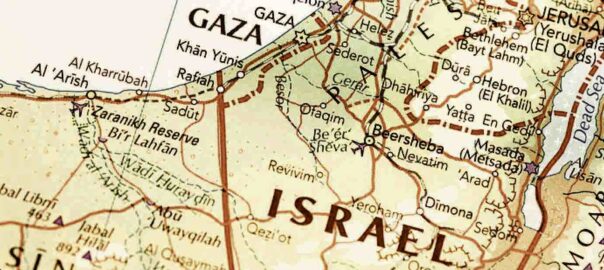
The recent Hamas-initiated violence against Israel has brought antisemitic voices to the public square once again. Thousands of rockets were aimed indiscriminately against a peaceful, tolerant nation. And for inexplicable, but predictable reasons, Israel was blamed for this latest “cycle of violence.” Though Israel is far from a perfect nation, she is the only multicultural democracy in the entire region and has offered generous peace terms for decades to leaders dedicated to her complete destruction. Calling Israel an “apartheid state” (she has nearly two million Arab citizens) and “Nazi-like” is inverted and perverted thinking of the highest order, especially when Hamas, Hezbollah, Islamic jihad, and Fatah (The PA military wing) all scream for her utter destruction and praise the policies of Hitler.

Before offering some ideas for peace, it is right that we remind ourselves of the positive contributions of Judaism to our world, even as Jews have faced racial and religious persecutions, pogroms, and the unutterable horror of the Holocaust.

Our Jewish neighbors bring three millennia of monotheism and morality, quests for justice and wisdom, and the foundations of individual dignity and socioeconomic fairness to our world. Christianity is built on these foundations and when it is not linked with coercive power, her adherents have shared with the Jews the values of compassion, love, and liberty. Tragically, Christian persecution of the Jews has been (and sometimes still is) an inexcusable part of her history and theology and was a foundation for the mutation of racist antisemitism that emerged in the 19th and 20th century and turned into industrialized murder by the Nazis.

Our Jewish neighbors have lived in the Middle East for over 3000 years. In spite of enforced emigrations, they never left Jerusalem and the surrounding areas completely. “Palestine” was a manufactured term by a vindictive Roman Empire in the 130s AD as they banished the Jews for their resistance and renamed Israel after their historic enemies the Philistines. The land that is now Israel was under Roman, Byzantine, Islamic/Ottoman, and from 1917 to 1947 British rule. There was never a cohesive Palestinian state or national identity – until Jews began to return to the land of their ancestors in the 19th and 20th centuries.

This return – led by a variety of Zionist movements – was not a military conquest. Land was purchased legally from the locals and with approval of the Ottoman Empire. Often the parcels purchased were of little value – desert and swampland, overpriced urban real estate, etc. With the help of global friends and much hard work, flourishing villages emerged and Jewish culture was revitalized. The end of World War I brought a surge of Jewish immigration, with the initial approval of the British and even the welcome of King Abdullah of Transjordan. With both League of Nations and local approval, a variety of plans were made for a homeland. Several Zionist groups agreed to an autonomous Jewish zone within Abdullah’s kingdom in 1922. Alas, the rise of the Muslim Brotherhood and the leadership of the Mufti of Jerusalem shattered such peaceful plans with their calls for violent jihad. From the 1920s to the present, all attempts at peace (including offering a co-capital in Jerusalem and 96% of territories gained by Israel in her victory of 1967) have been rejected. Yet Israel is blamed for her “occupation” and “oppression.”

Peace in the Middle East will only come when Arab leaders acknowledge the right of Israel to exist as the national homeland of the Jewish people and stop questioning her legitimacy and calling for her destruction. It is chic for some Western progressives to demonize Israel and see Palestinians as the oppressed, even to the point of calling Israel (and by extension all Jews) “White” colonizers! Such ignorance of anthropology, ancient and modern history, and the facts on the ground is appalling. The surge in global anti-Jewish violence is a direct result of such deceptive ideologies and narratives.

The enormous contributions of Jewish tradition and the current State of Israel are gifts to our world. Israeli global compassion, leadership in medicine, science, and technology, flourishing cultural expressions and willingness to cooperate with others are signs of goodness that no agitation propaganda can completely erase. Sometimes there are not two equal sides to every issue. In the case of Israel against the world, our Jewish friends have the high ground. Should Israel be criticized for some of her actions? Yes – and there is no livelier public square than Israeli politics! But turning our ears and eyes away from the real issues will not foster lasting peace.