Tag Archives: justice

We Need New Hearts

We need new hearts.
Even if we righted every historic wrong, established the fairest pathways of opportunity, reformed every institution…we would still be incomplete in our pursuit of justice without one more change: a transformation of the human heart that is only possible with divine love. Yes to systemic change…and a concomitant yes to reconciliation with God and each other arising from the Cross and Resurrection of Jesus. This more than a feeling…it is a metamorphosis of thinking, affections, and the will.

Lord, cleanse my heart of every hidden evil, all prejudice, and the selfishness lurking, waiting to take over in my vulnerable moments.

Lord, cleanse your church of apathy and fear, her sins of commission and omission, and help us reveal your love in how we love one another and all among us.

Lord, heal our land. Help us repent deeply, reconcile fully, and renew sustainably.

Lord, you resist the proud, and give grace to the humble. May your presence overcome polarizations. May your power overcome weaknesses. May your Passion be our pathway as we serve one another. Amen.

Good Intentions Subverted by Other Agendas

Dear conservative and progressive friends (and those of goodwill who dislike labels):

Throughout history movements for needed change are subverted by agendas contrary to the values of the initial advocates. Criminal justice and police reform, economic and educational change, ridding our souls and systems of racism – all of these and much more are worthy aims.

The well-orchestrated violence on the streets and the agendas of extremists are obscuring the legitimate (and painful) reform movements. When we stop reacting and start reflecting, there are creative ways forward that unite instead of divide.

Ethics are universal, but action begins locally. Better schools, new business opportunities, the end of banking and food deserts, and community-police cooperation…all of these require courage, wisdom, and love for neighbor, not burning buildings and refusing to listen to reason.

All of this begins with women and men who are thoughtful and refuse entrapment by ideological purity tests, Left or Right. Conservative friends unsparingly renounce racism and extreme nationalism and join with local leaders and foster conditions for flourishing. Liberal friends, renounce Antifa and other forms of violent overthrowing of government and honestly work with others for a more just world in the neighborhood.

Too many folks are paralyzed by fear of being seen as unpatriotic or unwoke. When this fear is replaced by faith in the Almighty, the courage to work toward justice, and the humility to discover pathways with others different from us, hope awakens, and communities thrive.

Two Questions

As we consider the turmoil in our streets and online, there are two guiding questions that may help us with a civil and insightful conversation. First, what does “there” look like as we aspire for a more humane, just, and loving world? Second, what are some practical steps toward this vision?

It is much easier to agitate and destroy than it is to build just and sustainable structures that help offer a flourishing future for all. Tearing down monuments to an unjust past is emotionally understandable. Yet, thinking deeply how to teach and understand the many narrative of American history will require more thoughtfulness that current reactions.

Conservatives tend to ignore the historical and systemic shortcomings and focus on personal opportunity and responsibility in achieving the ideals of the Founders and Framers. Some (not all) progressives find it hard to affirm anything positive about the past but offer few practical and economically feasible solutions for all the crises we face.

What does “there” look like? I long for a day when every (of every color or culture, class and gender) person – from conception to coronation – lives in a world with access, equity, and opportunity and can, with the help of others, flourish personally and add to the goodness of our world. “There” includes immigration reform, so America is hospitable and welcoming immigrants ready to contribute. Neither open borders nor separating families are good solutions.

Practically, serious reforms are needed in all sectors (business, criminal justice, education, political accountability, mental health, strengthening families, and more) so that these pathways are created and sustained. We can forge and better future without extreme deficit spending and defunding law enforcement.

Will we find the courage and wisdom to get past anarchy and ignorance, nostalgic and utopian dispositions and work toward justice? The road ahead is perilous but full of promise.

What America Are We Celebrating?

July 4th reminds us of the best and worst of American history. Many celebrate Independence Day and the ideals of the Declaration of Independence. And there is much to be proud of as we remember the sacrifices of so many that keep freedom’s flag flying. Others consider the failure of the Founders and Framers to offer a clear road of Emancipation for the slaves, thus delaying justice for millions, costing our nation a horrible Civil War, the tragedy of Jim Crow, and the unfulfilled promises of the Civil Rights Movement. Add to this the almost 100% record of broken covenants and treaties between the USA and the indigenous Native American tribes and being suspicious of American ideals is understandable.

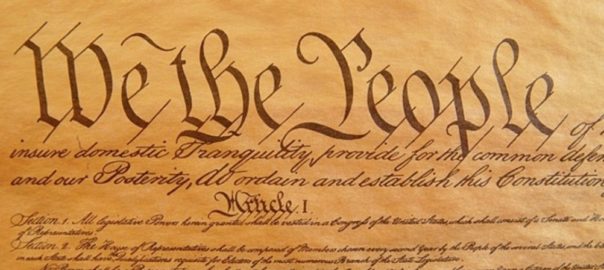
The USA is an experiment in virtue-based liberty and representative governance rooted in reverence of the Almighty, the equality of all people, and limitations on the power of government. But our history is a tapestry of tremendous and tortured narratives. We celebrate the Ellis Island Hospitality enshrined in the Statue of Liberty and forget the prejudice, racism, and exploitation of both slaves and immigrants. We rightly celebrate the entrepreneurial spirit and innovation of our culture and forget the painful road toward prosperity for most workers.

What makes America truly great? First, we see that our first liberty, enshrined in the first 16 words of the First Amendment of the Bill of Rights is complete freedom of conscience and religion for people of all faiths (or no faith) to live their lives and build their communities without government interference. Second, the promise of and potential for genuine access, equity, and opportunity for everyone. And third, our history of halting but continual progress toward justice.

Let’s celebrate heroes of the past and hopes for the future. Let’s feast in freedom and build a future so more can enjoy the fruits of freedom.

A Time for Repentance and Reflection

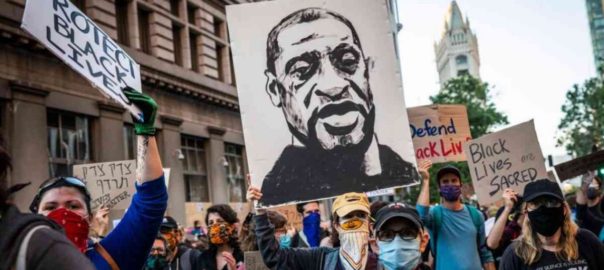
In the wake of the events following the murder of George Floyd, Made to Flourish issues the following statement. I think it is a clear, fair, and wise expression and I hope you will pass it on.

We join a chorus of voices in the unequivocal condemnation of the brutal killing of George Floyd, which followed the recent tragic killings of Ahmaud Arbery and Breonna Taylor. Of course, these are only the most recent examples among the long scourge of institutional and systemic racism and brutality against black and brown brothers and sisters who bear God’s image. We lament in the fullest biblical sense the injustice that has been perpetrated towards people of color which events like the killing of George Floyd continue to expose.

Above all, our righteous God is angered by injustice. And because the church is the visible representation of his voice and work in our world—the body of Christ—the church has a responsibility to offer prophetic critique and model a new way forward. Many churches have understood this calling, especially among our African American brothers and sisters. For many others, there is much work that needs to be done, undergirded by humble listening and sincere repentance. Corporately, we confess not only our sins of commission, in ways that the church has been complicit in racism, but also our sins of omission, as we have not loved justice and sought change that is consistent with God’s character and will.

As an organization, we exist to empower pastors and their churches to integrate faith, work, and economic wisdom, for the flourishing of their communities. Safe to say, our communities are not flourishing, and they haven’t been even long before the unrest of these past few weeks. Why? In part, we believe that the church has not been all that it is called to be in society. We say this not merely as a critique, but in humility, realizing that we have not embraced the totality of God’s mission in our world, the reconciliation of all things to himself, which entails reconciliation to one another.

While there are many ways to frame our current moment, one could say that our current crisis is a crisis of work, vocation, and economics. How will the people of God respond and live in their work environments? Will city government workers seek to build bridges in their communities? Will police chiefs and departments continue to inspect every system and incentive that leads to injustice? Will workers in unions not only protect their own but also embrace accountability? Will pastors and churches seek unity and partnerships, first among themselves, and also among the many non-profit, governmental, and for-profit companies engaging in redemptive work in our cities? Will each individual recognize and act on their responsibility to seek the common good of all in their community?

And of course, economics. Much has been written on the racial wealth disparities in our country, and how they undergird many of the challenges we face in our communities. The causes are myriad, some as old as the founding of our country. But how might the church embrace and call for expanding economic opportunity, rooting out bias in hiring and promoting, support for those looking for jobs, expanding access to social and financial capital, and calling for equal pay for equal work? In the model of sphere sovereignty, the institutional church is not always or even usually the final actor. But the scattered church, followers of Jesus deployed in every sphere of society, bring the aroma of Christ wherever they work.

We long for churches, alongside so many other important initiatives, to embrace the integration of faith, with work, and economic wisdom, for the flourishing of their communities. And we need to hear your stories of creative response and engagement. God’s Spirit is not done with his church. Through repentance and in humility, the church plays a central role in God’s redemptive plan, and the gates of hell will not prevail against it.

We end by praying for justice in our communities, that God’s justice would be made known in our cities where there has been rampant injustice. We pray for peace, not merely the absence of conflict, but the holistic flourishing of our communities under the reign of God. We pray for conviction in the face of our apathy and the seeming entropy of our concern. And we pray for hope, among what seems like a hopeless situation. Our God is more than able.

“And now may the God of hope fill you with all joy and peace as you trust in him, so that you may overflow with hope by the power of the Holy Spirit.” Romans 15:13