Once again, I want to share the wise words of a colleague and friend. Pastor Chris Brooks is a lead/teaching pastor, a host for Moody Radio, an author and speaker, and deeply devoted, Gospel-centered catalyst for positive change. Here are his reflections on the George Floyd moment:
by Chris Brooks | June 2, 2020
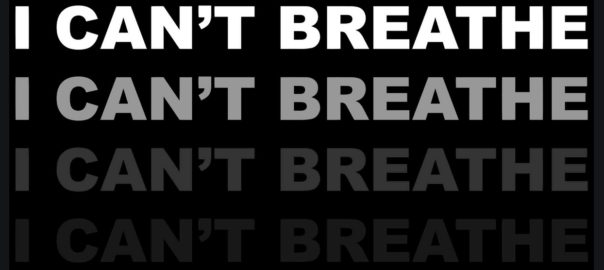
Last week, I lost my breath. My breathlessness came because of watching the now viral video of a man gasping for the desperately needed air his lungs begged for. He pleaded with the police officer whose knee was crushing his windpipe as he moaned out the words, “I can’t breathe.” These are infamous and haunting words for African Americans who became all too familiar with this painful phrase as we watched the killing of Eric Gardner by New York City police in 2015. The echo of this refrain acts as a dying man’s declaration of his demise at the hands of those who cared more about administrative procedure than his asphyxiation. These three grievous words, “I can’t breathe,” also stand as damning evidence of a generation’s lack of basic human decency toward those who are all too often misunderstood, mislabeled, and marginalized. These are words we hoped we would never hear again, yet the pain they bring came rushing back into our souls as we saw, through tear-filled eyes, the killing of Mr. George Floyd.
These types of horrific events trigger fear, pain, anger, and distrust in the hearts of ethnic minorities. Those who personally identify with the social situation that created the conditions for the death of Mr. George Floyd are left feeling vulnerable and afraid. Unfortunately, the psychological stress produced from seeing a man slowly die as he agonizes and helplessly cries out for his life is only exasperated when minorities look to their spiritual families and local churches for comfort. Too often they find deafening silence or even worse, a voice of rebuke from church members who feel it’s out of place for them to express their lament. To affirm Christian love and the solidarity Christ prayed would mark his Church (John17:20–23), we must give voice to these undeniable injustices.
Our acknowledgment must transcend the social scientists and cultural commentators of our day. Our critique must rise to the level of the gospel. This is true precisely because we are gospel people, and this is a gospel issue. Injustice is always a matter of the gospel revealing our blind spots and exposing our theological deficiencies. The holes in our gospel can only be remedied in Christ as we have our hearts reformed by his Word and filled with his grace. Considering this, I suggest there are three gospel truths Christians should address when considering the killing of Mr. George Floyd.
Three gospel truths Christians should address
1. We do not believe in Moralistic Evolution. While most people may not be familiar with the term and corresponding tenants of moralistic evolution, our society has been deeply impacted by its beliefs. Darwinism has long been the accepted and, in the minds of many, unquestioned worldview of the academy. Secular humanism ascribes to the belief that humanity improves over time through the process of natural selection. This conviction is also known by the phrase, “the survival of the fittest.” Darwinists champion the hypothesis that genetically, humanity grows stronger as weaker genes are weeded out in favor of more dominant genes, which are then passed from one generation to the next.
When applied to one’s view of ethnicity, Darwinism expresses itself through the claim that weaker races of people are rightfully dominated by stronger ones, thereby improving humanity. Secular biologists, like the outspoken Princeton professor Peter Singer, unapologetically advance the idea that weaker species lack value and, therefore, deserve to be eliminated by stronger ones who exercise their might. This erroneous and deadly doctrine extends to the field of ethics as well. It is falsely assumed that humanity exists on an invisible, but real, arch of moral improvement as it pertains to our morality.
It has been 45 years since the term “sociobiology” was introduced by E.O. Wilson who suggested “the time has come for ethics to be removed temporarily from the hands of the philosophers and biologicized” (Wilson 1975, 562). His conviction was that humanity evolves morally, thereby forming progressively more just societies by weeding out detrimental ethics in exchange for behaviors that increase the common good. According to the proponents of moralistic evolution, these superior behaviors are codified and agreed upon through some form of an assumed social contract. Under this contract, societies of people agree to do away with actions that bring harm to one another in exchange for a morality preserving their collective futures. The central tenant of moralistic evolution is that each successive generation, guided solely by the forces of biology, becomes morally superior to their predecessors. However, this assumption has one major problem. The evidence does not support it. We need look no further than the genocides of the 20th century around the world, the Jewish Holocaust in Europe, and the rise of racism in our own country to see the truth. From the institution of Jim Crow, which marked the American Bible Belt just a generation ago, to the present-day increase in the number of hate crimes and racialized hate groups, the truth sits plainly before our eyes. The murder of Mr. George Floyd is simply the latest of these atrocities.
Sadly, the reach of moralistic evolution has crept into the church in many ways, especially as it pertains to the inconvenient sins of racism and discrimination. Many within the church assume somehow our society is growing more morally fit and racism is decreasing. However, the message of Scripture is consistent concerning the heart condition of each generation of humanity. Jeremiah 17:9 reminds us, “The heart is deceitful above all things, and desperately wicked: who can know it?” As Christians, we can not ascribe to the social heresy of moralistic evolution. The Bible’s indictment over the wickedness of our hearts is not simply a matter of concern within the Torah or the Old Testament. Our eschatology (the theology concerning death, judgement, and the final destiny of humankind) is also informed by the Apostle Paul’s concern over the corrupted nature of the human heart. He expressed this concern in a letter to Timothy:
“Understand this, that in the last days there will come times of difficulty. For people will be lovers of self, lovers of money, proud, arrogant, abusive, disobedient to their parents, ungrateful, unholy, heartless, unappeasable, slanderous, without self-control, brutal, not loving good, treacherous, reckless, swollen with conceit, lovers of pleasure rather than lovers of God, having the appearance of godliness, but denying its power. Avoid such people.” 2 Timothy 3:1–5
The sin of racism is just as rampant and vile today as it has always been. The only unique reality for our generation is this evil is now being recorded and spread virally through the powerful platform of social media. The gospel, which is the only cure for these forms of discrimination and injustice, is just as needed today as ever. Without the transforming grace of Christ at work in our lives, we are no less bigoted, racist, or prejudiced than our ancestors. So, the church must not fall prey to thinking that racial discrimination is a thing of the past. The killing of Mr. George Floyd is a tragic reminder racism is a current and present danger.
2. We must continue to acknowledge that the Homogeneous Unit Principle has done much damage to our witness and renders many churches powerless for addressing injustices.
I realize the Homogeneous Unit Principle (HUP) is a theological term foreign to most, but its practical impact on the Western church is enormous. Popularized in the 1970s, HUP became the driving theory behind the Church Growth movement. The pragmatic underpinnings of HUP were simple yet effective. Proponents argued the best way to grow a church numerically was to create spiritual communities marked by commonality and not diversity. Many missiologists of that time adopted the belief that evangelism was most effective when people were not forced to cross ethnic, linguistic, or cultural barriers. It was theorized that the more diverse the environment, the slower the growth and the fewer number of conversions. HUP was applied by church planters with wild numerical success.
Sadly, a generation of churches were born that neither reflected the demographics of their community nor were in touch with the concerns of those outside their socioeconomic world. The problem again is that HUP is not the gospel. Thankfully, groups like the Lausanne Movement (1977), which was co-founded by evangelists Billy Graham and John Stott for the purpose of advancing the global spread of the gospel, began to confront and condemn HUP as a practice. The Pasadena Coalition, as they were then called, noted that from the beginning the church was intended by Christ to be multi-ethnic and culturally diverse.
Revelation 7:9 declares, “After this I looked, and there before me was a great multitude that no one could count, from every nation, tribe, people and language, standing before the throne and before the Lamb. They were wearing white robes and were holding palm branches in their hands.”
This beautiful mosaic is the picture Christ wants his church to reflect as we focus on multiplying disciples, leaving the numerical growth of the church in the hands of Christ and not in the hands of pragmatists. It is through the natural and healthy tensions that arise from living in a loving, gospel-centered local church, with other believers who come from a different socioeconomic reality than us, that we develop the spiritual muscles needed to address the structural injustices in our society. Christ intends for the church to be diverse, even if it means exchanging short-term and sometimes shallow numerical growth for a greater depth of spiritual maturity as we become disciples who make and multiply other disciples.
3. We must extend our commitment to the sanctity of life to marginalized adults.
My wife and I are passionately pro-life. It is this conviction that has led us to become foster and adoptive parents. As we do our part in defending the rights that come along with the personhood of the unborn, we have become unapologetic and outspoken advocates. Over the years we have also immersed ourselves into the Right to Life community. We joyfully and financially support the courageous, gospel work of pregnancy resource centers. I know firsthand the blessing of sharing my faith with hurting young moms and dads as they stand outside an abortion clinic just steps away from making an unalterable decision that will damage their souls and destroy the life of their precious baby. For my wife and I, all our pro-life passion is rooted in God’s inerrant Word. We wholeheartedly believe Scripture affirms each person is a unique and special creation of God. As early as Genesis 1:26 we are told people are made in God’s image and after his likeness. Scripture never shies away from the teaching that life begins at conception. The words of Jeremiah 1:5 burn deeply in our hearts,
“Before I formed you in the womb, I knew you, before you were born, I set you apart…”
However, it is equally important for us to affirm God loves and identifies with the marginalized adults in our community as much as he does the unborn in their mother’s womb. The prophet Isaiah instructs God’s people to, “Learn to do right; seek justice. Defend the oppressed. Take up the cause of the fatherless; plead the case of the widow.” In Proverbs we are given guidance for what it means to live a life that honors God and invokes his blessing. Proverbs 31:8–9 tells us that in part, living in reverence and honor of God means we obey the instruction to, “Open your mouth for the mute, for the rights of all who are destitute. Open your mouth, judge righteously, defend the rights of the poor and needy.” By all measure Mr. George Floyd was a member of the group that Proverbs 31:8–9 has in mind.
Mr. George Floyd deserved to breathe. He was a man who was made in the image of God. No doubt he was marred by imperfections, like all of us, but he was worthy of dignity. This is why I refer to him with the prefix “Mr.” It is my way of bestowing upon him the respect he should have received as he lied under the pressing knee of pain, gasping for breath, and calling out for mercy. Jesus died for his sins! This is precisely the point. Ultimately, the mercy and grace he was looking for is found in Christ alone.
But we have the responsibility to give voice to the voiceless. We must declare to the world that his value in the eyes of God was unquestioned. No matter his past or present condition, Mr. George Floyd deserved to breathe. It is not until we rid ourselves of the deficiencies of our theology that we will be able to honor his life by helping others who live in the fear that they or their sons, brothers, or fathers might be next. Breathe the fresh air of justice both in this life and the life to come.
Editor’s note: This article originally appeared at woodsidebible.org.